Showing posts with label A Star Is Born. Show all posts

Saturday, January 1, 2011

My Top 10 (or so) Films for 2010

I spent most of the year watching older stuff, filling in some gaps, and catching up on films I probably should have already seen but that had escaped me for one reason or another.  Meanwhile most of the more talked about 2010 fare I still need to track down.

Here's my list:


William Wellman's A Star Is Born (1937)


It is at once an extremely tender and tragic love story.  Cukor's version is one of my favorite films of all time, but Wellman's original certainly doesn't disappoint.  It's a wonderfully felt film, full of unforgettable moments and sincere connections.


Yasujiro Ozu's I Was Born, But... (1932)


What deep emotions Ozu is able to explore, particularly the idea of young kids having to come to terms with their father's rank in society. Ozu goes deep, takes it slow, but explores characters and themes that are incredibly universal and real.


Leo McCarey's Make Way for Tomorrow (1937)


One of the best depictions of aging I have ever seen and full of many gut-wrenching and poignant moments.  I didn't fully connect with the character of the aging woman.  But otherwise, I found it to be an utterly bold, unique, and powerful work.


Vittorio De Sica's Umberto D. (1952)


Perhaps the film if you want to understand the bond between a dog and its owner.  Moving, realistic, wise, and full of heart.  A movie with a huge reputation, and rightfully so.  


Yasujiro Ozu's Late Spring (1949)
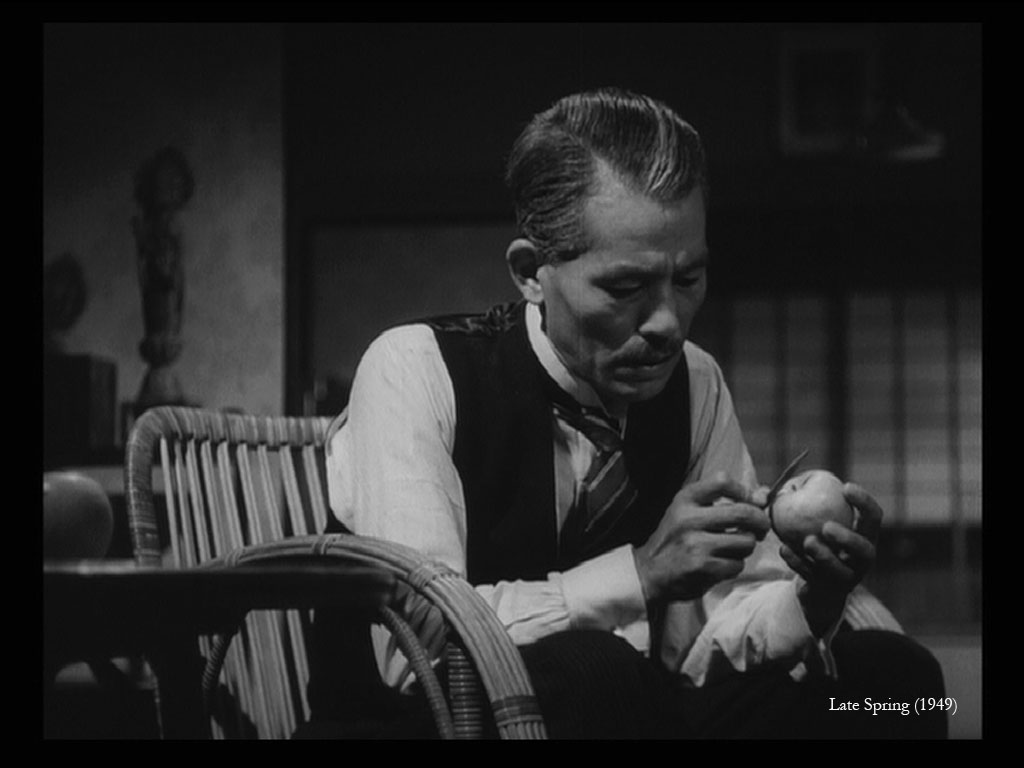


Another extraordinarily tender and wise film about  life, relationships, and personal growth and evolution.  Ozu keeps things minimal and spare, as usual.  But whenever he goes outside we're reminded of his strong connection to nature and his tremendous feeling and eye for the outdoors. Soft but packs a punch. 


John Ford's Mogambo (1953)


A flawed film, certainly.  But a fever dream of a flick with the painfully beautiful Grace Kelly and some of the most suspenseful scenes in the history of cinema involving animals and humans.  Nice to see Ford taking a break from the Irish thing and delivering this complex tale.


Josef von Sternberg's Morocco (1930)
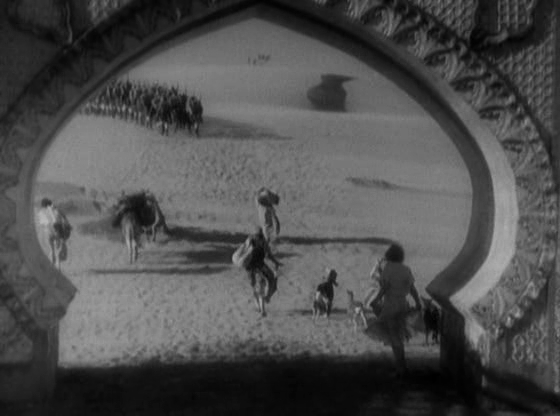


The most poetic von Sternberg I've seen and some incredibly brave and conceptually consistent filmmaking -- those tracking shots and the scene of Dietrich looking for Cooper upon his troop's return.  I still probably prefer The Blue Angel, but this one pushes very close.


Luchino Visconti's Ossessione (1943)
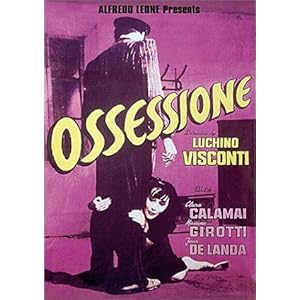


Based on the same James M Cain novel, The Postman Always Rings Twice, that led to two American films, this early film from one of Italian cinema's masters is a neorealist marvel.  Detailed, beautifully observed, this seems like a key influence on Godard's Breathless, and many of the other French New Wave works. 


Leo McCarey's The Awful Truth (1937)


I had seen this one about 15 years ago in a Parisian theater and had a mediocre reaction to it but man was I wrong.  This has some of the greatest moments and exchanges of the entire period, particularly the final scene and almost every scene with Mr. Smith, the dog.  I still may slightly prefer His Girl Friday, but this is undeniably a great work.


John Ford's The Long Voyage Home (1940)


I'm still somewhat new to Ford's work.  I've probably seen less than ten of his films.  But I'm starting to see more and more clearly the reason for his huge reputation.  There is a depthfulness and heavy melancholy to some of his work that gives it the kind of heft I've experienced with some Ozu, Mizoguchi, Bresson, and Dreyer.  Toland does some extraordinary things here.  There are four or five completely gut-wrenching scenes, and there's a realism to a couple of the action set pieces that is absolutely masterful.  


Ross McElwee's Sherman's March (1986)


Like Killer of Sheep and Stranger Than Paradise (and many others, of course), Sherman's March is a key work in the history of American independent filmmaking.  But somehow it's just now come to my attention. Ross McElwee's film is absolutely not for everyone.  It's lo-fi, quirky, slow, long, and even a bit austere in its approach.  But it's also very personal, without ever really being abrasive or intimate, in an overly exposed way.

I'm always looking and thinking about ways to make my own work more personal without making it self-absorbed.  It's a tough balance to strike. And whenever I find a filmmaker who can consistently entertain me while talking about themselves, I usually embrace their work (Woody Allen, for instance).  Obviously, it's easier when the filmmaker has a comic streak; it just lightens the whole venture.

One of my favorite contemporary filmmakers is Andrew Bujalski, and particularly his film 
Funny Ha Ha.  If you like that film, I highly recommend this documentary.  Bujalski, like McElwee, really lets you in on his awkwardness, insecurities, anxieties, but he does it with real nuance, grace, and of course, occasional humor.   Some would call both of these films mumblecore, I would simply call them very fine works by very patient and bold filmmakers.


Steven Spielberg's Munich (2005)


Some of my reservations with Spielberg are on display -- his questionable sense of humor, his lapses into sentimentality, and his taste in music.  But it's also as clear as ever that when he puts his mind to it, his formal skills are up there with any of the masters.  The action sequences -- the opening of the film, when Avner first flashes back to "Black Sunday" while asleep on the airplane, the phone bomb, the attempted killing in London, and the first murder in Italy -- are all incredible in their grace, energy, and effectiveness.  In fact, they are probably the strongest set of action sequences I've seen since Heat.  A film with several flaws -- overly wordy, overlong, and uneven.  But when it's great, it's a classic.   


Kiyoshi Kurosawa's Tokyo Sonata (2008)


Kurosawa's lightest and most accessible work I've seen.  It's great to see the director working outside of genre and in territory that's already been masterfully done by Kitano (Fireworks) and Yang (Yi Yi).  Restrained but lyrical with the best final scene I've seen all year.  A wonderful film.  

Saturday, August 14, 2010

Favorite five, part 2

As I mentioned during my first entry in this series, I will periodically check in and mention the five films that have most resonated with me of late.  I'm taking in a good number of films at the moment, mostly via Netflix, but among what I've seen in the last month or so, here are the five I've liked the most:

Leo McCarey's Love Affair (Irene Dunne in as moving of a performance as I've seen from her)
Francis Ford Coppola's Tetro (A pretty damn personal film from one of my favorite American filmmakers)
Frank Capra's Lost Horizon (Some interesting spiritual subtext and thematic material)
William Wellman's A Star Is Born (Like the Cukor version, contains some of the most emotional scenes in all of Hollywood)
Ken Burns' Jazz, Disc 1 (For Wynton Marsalis being about as compelling a personality as I've seen in a long time)

It's discoveries like these that make me eager and ready to discover the next five.  Happy viewing to all.

Wednesday, March 3, 2010

1954: The Barefoot Contessa (Joseph Mankiewicz)

1954: The Barefoot Contessa (Joseph Mankiewicz)
I'm not sure I've ever met anyone that likes this movie as much as I do. I wish that weren't the case, but what can I really do about it?


I mentioned in an earlier post that two of my favorite themes on screen are friendship and loyalty, and that's what really gets me here.  It's the friendship that Humphrey Bogart shows Ava Gardner, and his loyalty towards her, that I find so deep and moving.  In fact, it's probably my favorite purely platonic male-female relationship in the history of film.

It's Humphrey at the end of his career, wise and settled in this very powerful way.  And, Ava Gardner, who I think is as beautiful as anyone I've ever seen.  Also, of note, are the colors and the grand sense of tragedy that Mankiewicz creates around it all.  

Another one I'd take on a desert island with me.  Be a great one to have, too!  If a stranger shows up, they probably wouldn't even want it.

Other contenders for 1954: A year, like any other, where I still have some things I need to see.  These include:  Luis Bunuel's Wuthering Heights, John Sturges' Bad Day at Black Rock, Andre De Toth's Crime Wave, Richard Quine's Drive a Crooked Road, Allan Dwan's Silver Lode, Nicholas Ray's Johnny Guitar, Kenji Mizoguchi's Sansho the Bailiff, William Wellman's Track of the Cat, and Josef von Sternberg's The Saga of Anatahan.  I really need to re-watch both Henri-Georges Clouzot's Les diaboliques and Akira Kurosawa's Seven Samourai.  It's been too long since I saw either of them to know where they would place on a favorites list.  Even with all these gaps though, there are still some films to mention.  I really like Otto Preminger's River of No Return and Anthony Mann's The Far Country.  I love Alfred Hitchcock's Rear Window, Elia Kazan's On the Waterfront, George Cukor's A Star Is Born, and Jacques Becker's Grisbi.  But my closest runner-up is Roberto Rossellini's Voyage in Italy.

2/11/11 I watched William Wellman's Track of the Cat.  The fact that this is on Jonathan Rosenbaum's top 100 films of all time list makes me a little more skeptical of the great critic's taste.  Mitchum turns in a strong performance, and there is a decent allegorial weight to it all.  But much of it feels too theatrical for my liking, and with just mediocre Val Lewton-type suggestion.  

2/18/11 I watched Allan Dwan's Silver Lode.  Allegorical with some nice expressionistic touches from Dwan and Alton.  Just wish the execution was a little more subtle and the atmosphere more carefully and subtly handled.  

2/19/11 I watched Kenji Mizoguchi's Sansho the Bailiff.  Mizoguchi has a darker, more violent streak than Ozu, and his films can be rough where Ozu's are soft.  Heavy metal to Brit pop if you will.  But he's also a humanist.  And that comes through in this hefty work.  Mizoguchi feels very modern and masterful when it comes to dealing with non-linear structure, and certain moments, like when the mom and children are separated by boat, pack a real power.  Not fully felt for me but appreciated with the utmost respect.   

2/25/11 I watched Andre De Toth's Crime Wave.  The real stars here are the city of Los Angeles and a bunch of delicious character actors (particularly Jay Novello, Tim Carey, and Charles Bronson).   De Toth keeps things spare and taut, but a few times some inventive camerawork sneaks in.  Meanwhile the noir atmosphere never falters.   An exceptional example of B-noir.  Flawed, certainly, but an unusually strong outing.   

11/15/11 I watched Roberto Rossellini's Dov'e la liberta...?  A strange Rossellini that feels more Felliniesque than the work of the master of restrained and austere.  Almost felt like a made-for-hire.  

3/16/13 I watched Roberto Rossellini's La Paura. Bergman is wonderful as always, and it's interesting to see Rossellini doing noir. But the script is a bit lackluster at times. Particularly, without Rossellini's transcendent ending, the whole things ends up leaving a bland taste on the buds.  

10/11/13 I watched Douglas Sirk's Magnificent Obsession.  My first time with this well-known Sirk, and it certainly is as loony as I heard whisperings of.  But Sirk gives it tragic depth and keeps the emotion swirling and somehow manages to transform seemingly insane form (garish music and color) and content (plotting that no one in their right mind would ever consider plausible) into something uniquely wonderful.  Although I still prefer Written as it seems perhaps a little more restrained in its content and outlandish in its form, Magnificent deserves a place all its own. 

11/2/13 I watched Nicholas Ray's Johnny Guitar.  Feverish with Ray's unique emotionalism and spatial mastery on grand display.  Crawford is as powerful as ever, and this western is a world all its own.  It's pulp, melodrama, and baroque art.  It's no surprise this film enjoys such a major reputation - it's a wonderful piece of work by a great filmmaker. 

11/24/13 I watched Richard Quine's Drive a Crooked Road.  A very effective noir featuring the best and most natural Rooney performance I have seen.  Traces of the film show up in Lost Highway and possibly even Drive.  Cold, tight, and full-blooded noir, Quine might not be as harsh as Lang or Ray but he is courageous in his depiction of the femme fatale and seems at ease no matter how fatalistic the plot and the characters become.  

10/3/20 I watched Herbert Biberman's Salt of the Earth.  From a historical standpoint, it is a completely fascinating film.  I can't recall an earlier American work that bears so much Italian neorealist ethos.  While perhaps not always cinematically of the greatest interest, it is bold in the subject matter it tackles, particularly that of sexual equality.

2/2/23 I watched Robert Wise's Executive Suite.  Wise could very well be an unfair victim of the auteur theory.  Although I have seen no where near his entire body of work, I'm a huge fan of The Set-Up and really like The Day the Earth Stood Still.  I watched this because it's one of Rosenbaum's 1000 essential films and man is it good.  It's unique in its exploration of corporate America and seems like a clear predecessor to Lumet's 12 Angry Men.