Showing posts with label Still Walking. Show all posts

Sunday, January 1, 2012

My Top 10 (or so) Films for 2011

I spent the last year watching some older stuff, filling in a few gaps, and catching up on films I had always wanted to see.  Here's what I came up with -- my list, the several hands full that reminded me of why I continue chasing cinema past:


Michelangelo Antonioni's The Passenger (1975)


Antonioni's incredible talents are all over -- his meticulous framing, his daring yet languid camerawork, and his feel for spaces that the medium somehow forgot to cover.  Slow and cerebral like all his work, The Passenger separates itself from the rest of A's films with its summer exteriors and rustic locations.  It's simply one of the cinema's truly great road movies.

Robert Altman's Thieves Like Us (1974)


The most sexually-charged of the Altman pics I've seen, and certainly one of the most interesting.  Feels like a pet project, extremely unconventional stylistically just like McCabe.  And strange as it may seem on paper, a precursor to Michael Mann's free-form stylings on Collateral, Miami Vice, and Public Enemies.  


Corneliu Porumboiu's Police, Adjective (2009)


The new Romanian cinema has gotten much acclaim of late, and after seeing 4 Months... and this film it's easy to see why.  What's so striking is its fresh naturalism, running in such a different direction from cinema's other reigning naturalist champ, the Dardenne brothers. Unlike the handheld close-ups populating the work of the Belgian brothers, Porumbiou keeps the camera fixed and in wide frames.  He also favors long takes in a way that we rarely, if ever, see in the work of the Dardennes.  Other than the final ten minutes, I'd have no hesitation declaring it one of the greatest of recent films, and a full-blown masterpiece.   


Jacques Tourneur's Canyon Passage (1946)


First, I have to thank the great Peter Lenihan for placing this gem on my radar.  What a western it is.  It has the psychological complexity of the Anthony Mann westerns, and already in 1946 feels like it's ripping the genre apart.  But it's not cold and clinical like the Mann films. Tourneur's camera's always moving, and there's a tremendous vitality in every single shot.  Brings to mind another Tourneur favorite of mine, Stars in My Crown.  And makes yet another strong argument for Tourneur's place in the highest of all pantheons.  


Sam Peckinpah's Pat Garrett and Billy the Kid (1973)


A loose, mournful western from one of the late masters.  Peckinpah meanders, ponders loyalty and lost ideals, and delivers what might be the most personal of all his works.  The loss of a lifestyle, the onset of civilization, and a western about not fitting in, that doesn't really fit into anything that's come before or since. 


Terrence Malick's The Tree of Life (2011)
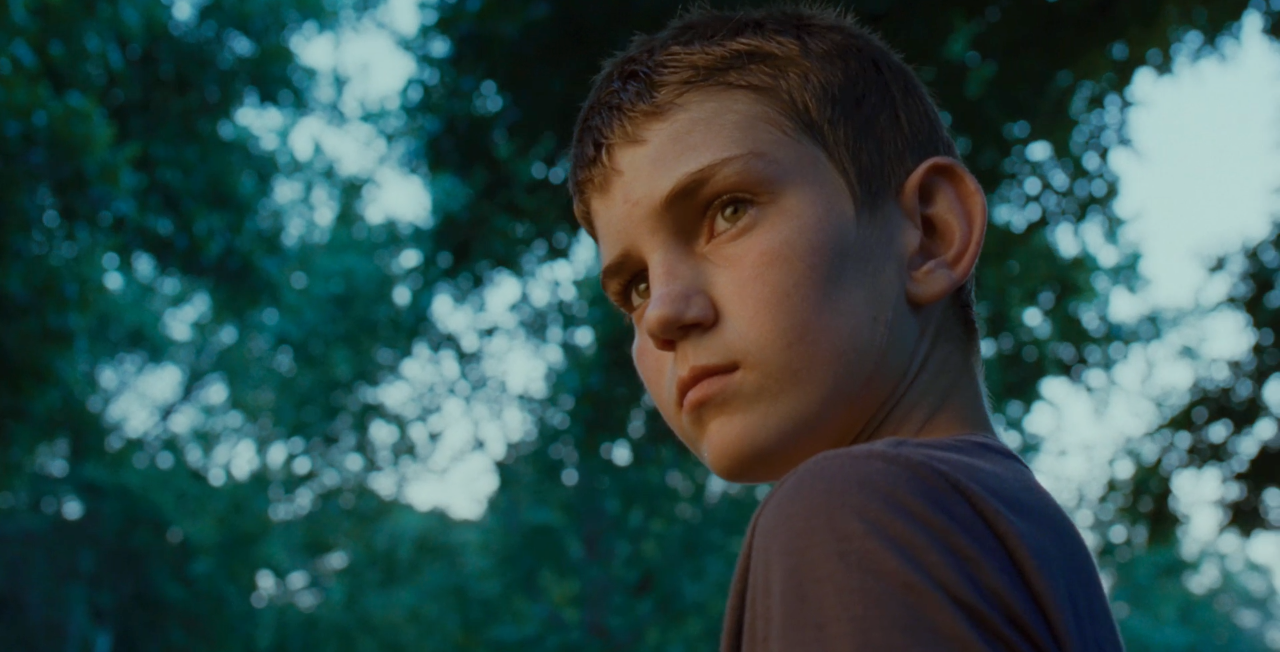

Malick is looking at different ways for cinema to work.  And although his connection to nature may not jump off the screen like it did in The Thin Red Line, his incredibly specific memories of childhood allow him to wash connections over us.  He does it in very short brush strokes, and as he swims through his own fleeting images, we see so much of ourselves. His work with the children is simply extraordinary.  And I think his style really gains with many of the jump cuts remaining in the tool box this time. Full of narrative courage and exploration (the first time the animated sequences break the narrative it seems as though a whole new prototype for story is being offered), and a work of tremendous ambition.  I think there are flaws.  Sometimes his elliptical wanderings go too far and end up feeling more elusive than illuminating.  And after seeing the film twice, I'm still not convinced he wouldn't have benefitted from a stronger actress than Chastain.  But it's a dense film, inviting discussion and multiple visits.  


Hirokazu Koreeda's Still Walking (2008)
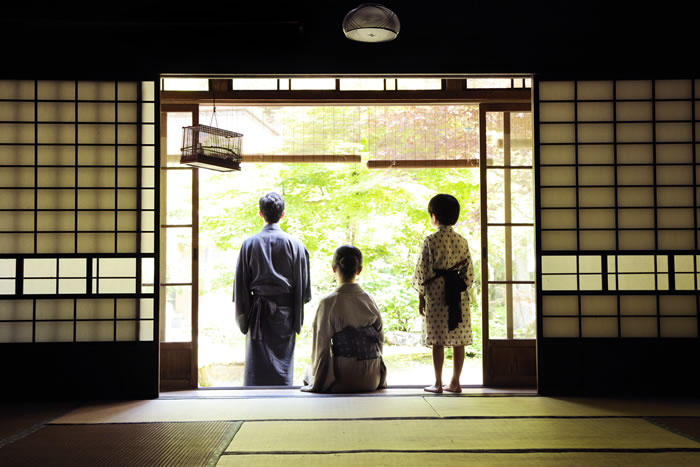


The third of the director's films I've seen, and he continues to rank among my favorite of all the contemporary Asian filmmakers. Koreeda's undeniably a humanist, and as his with other two films, there are moments that carry a tremendous amount of power.  Not perfect, I particularly found a little fault with the saccharine nature of some of the score.  But all in all a memorable effort from one of the few directors still carrying Ozu's torch.  

Werner Herzog's Fitzcarraldo (1982)


Part of that unique genre, the "extreme film", along with works such as Apocalypse Now and Sorcerer.  These films all show filmmakers willing to travel to dangerous lengths to paint unprecedented canvases and test their own abilities as storytellers and dream purveyors. Herzog's film might feel slightly disjointed at times.  But the scope at which he is working and the heart that drives both him and Fitzcarraldo allow the film to rise memorably above any shortcomings.  A classic of the genre, and probably about as personal as Herzog's work can ever be.  


Wim Wenders' Tokyo-Ga (1985)


An exploration that almost feels like a Godard or Marker essay.  An unorthodox, somewhat meandering doc that seems essential viewing for any fan of Ozu's work.  Wenders mourns cinema's loss of one of its most special practitioners using Ozu's favorite city, Tokyo, to look at how the world has changed since his passing.  Wenders also memorably spends time with some of Ozu's closest collaborators.  


Charles Ferguson's Inside Job (2010)

A powerful and utterly disturbing portrait of the events that led to 2008's global recession.  Ferguson explains some of the chief causes in a very lucid manner and presents a very passionate attack on America's financial services industry.  Whether or not you agree with all that he has to say, this is a must-see, if for nothing else, the opportunity to get a further look at many of the chief players.  


Roberto Rossellini's The Rise of Louis XIV (1966)


The first of Rossellini's historical dramas that I've seen, and admittedly it takes awhile to get used to his later style.  But it snakes its way around, accumulating historical import, and by the end, finds its emotional highpoint.  Another transcendent and powerful work by one of cinema's most unusual and rigorous stylists.   


Maurice Pialat's La Gueule Ouverte (1974)


Pialat only made ten features, and this is the eighth that I've seen.  It's the one time he collaborated with the masterful cameraman, Nestor Almendros, and the partnership lends immeasurable poetry and lyricism to Pialat's heavy, uncompromising cinema.  I think it's my favorite Pialat, and with its final shot one of the great closing shots in all of cinema, a nice way to end 2011.

Tuesday, February 22, 2011

Favorite (four), part eight


Just like in my other seven posts thus far in this series, I want to take a second to single out the highlights of my recent film viewing.  I'm trying right now to take in almost a film a day.  Most have been first-time viewings.  And most I have been glad to finally see, but only very few have stayed with me.  This series is my filter for those (and hopefully one or two of these will be good to someone else, too).


Hirokazu Koreeda's Still Walking

The third of the director's films I've seen, and he continues to be among my favorite of all the contemporary Asian directors.  He's definitely a humanist, and there are moments that carry a tremendous power.  Not perfect, I particularly found a little fault with the saccharine nature of some of the score.  But all in all a memorable effort from one of the few directors still carrying Ozu's torch.  


Aaron Katz's Quiet City
Light and sweet, Katz has heart, and it shows.  I don't find his writing as interesting as Bujalski's, nor his ability to capture nuance and awkwardness as skilled as Bujalski's talents.  But Katz has some of David Gordon Green's feeling for sound/image and creates a couple of tremendous moments here. The scene of the four young adults dancing at the house party might be my favorite scene all year.  I look forward to seeing more of Katz.  It's works like this one that continue to keep me interested in mumblecore and somewhat optimistic about micro-budget filmmaking.   


Emmanuel Laurent's Two in the Wave
Not the most marvelous film ever.  But it is a documentary about my favorite period in the history of cinema, The French New Wave, and it covers aspects of this wonderful movement that I've rarely seen on film, including Leaud's screen test for The 400 Blows.  I consider the film's two main subjects, Godard and Truffaut, to be among the most passionate of anyone that has ever worked in the medium, and to this day for me they're both still huge influences and inspirations.  


Yasujiro Ozu's There Was a Father

Ozu is without a doubt my favorite directorial discovery of the last year. His movies tell us so much about ourselves, and when it comes to showing us aging and family, I'm not sure Ozu has a rival.  I particularly like his bold, editing style in this one.  He jumps ahead between scenes, always knowing that we'll eventually catch up.  I'm not a huge fan of the actor playing the older son in this one, but all in all, another wonderful experience in the world of Ozu.