Monday, May 20, 2013

At Berkeley (Frederick Wiseman)

5/19/13 I watched Dave Grohl's Sound City.  In this his directorial debut, Grohl reveals himself as adept storyteller and comfortable behind the controls of a vast amount of cinema's stylistic toolkit.  The story possesses that raison d'etre at the heart of most great docs.  Some of the music at the film's heart does not fully do it for me, but I think Grohl's film falters most as he works to weave subtext and a larger frame around the story.  It's a very entertaining doc that would have hit harder with a little more suggestion and a little less exposition.

8/5/13 I watched Ryan Coogler's Fruitvale Station.  There are many things to admire here.  Jordan's performance is pretty fantastic and Coogler does certain things surprisingly well, for instance, the way he puts together the climatic moment on the platform or the way he opens the film.  He has an unobtrusive way of using the camera and a natural feel for propelling story forward.  Yet when I compare this to the 25th Hour or Do the Right Thing, two films of which it reminds me a great deal, I cannot help but feel it lacking in parts.  Granted, it was made for probably less than 1/10th of either of them, but I also think it has some pacing issues and cannot seem to figure out how to end itself.  I also wonder if the whole thing would have been much stronger if the initial flashback had not been there.  This technique works wonderfully in certain noirs, especially in a film like Carlito's Way, but here it lets too much of the important air out.

9/27/13 I watched Paul Greengrass' Captain Phillips.  Hanks brings it and proves once again he can inject humanity into these big budget action films like no other.  And Greengrass keeps the lines taut at all times in a way that merits admiration.  I just wish he was not afraid to add some space to his work to ask us to think as much as he asks us not to breathe. 

9/28/13 I watched Frederick Wiseman's At Berkeley.  My first theatrical experience with a Wiseman film is also my best theatrical experience of the year so far.  Wiseman combines Renoir's humanism with Ozu's patience to offer up an exhaustive and meticulously observed look at a contemporary public university.  We take away a great deal from participating in some of the student discussion as well as from our access to a number of administrative cabinet meetings. Nothing feels put on, this is demanding, unadorned, naked filmmaking of the highest order that places demands with its style and four hour length but offers reaffirming sentiments on cinema and life for all willing to go along.

9/28/13 I watched Joel and Ethan Coen's Inside Llewyn Davis.  If Renoir is correct that every filmmaker is simply trying to improve upon the same film each time out then the Coen brothers finally get an aspect of their work right that I feel they have fallen short on the last few times out - the film ending.  Whereas I felt they missed the mark in No Country and A Serious Man with their abrupt, oft kilter final moments, ILD's final moments bring everything together in a masterful, fresh way that keeps the Coen's work feeling very modern and daring.  One of their very funniest films and also one of their most accomplished. 

9/29/13 I watched Hong Sang-soo's Nobody's Daughter Haewon.  My third or fourth film by the South Korean and the first I have seen in a theater.  I like him as one of the closest practitioners of Rohmerian cinema.  But in this one his technical specs (ie video rather than film) and the presence of more Rivette than usual left me a little more lukewarm on this work. 

11/23/13 I watched JC Chandor's All Is Lost.  For what it is, it is fairly absorbing but I found Redford's lack of greatness evident and the ending flat on both an emotional and aesthetic level.

11/30/13 I watched Abdellatif Kechiche's Blue is the Warmest Color.  Kechiche works in Dardennes territory favoring close-ups, handheld camerawork, and a naturalism of image, look, and performance.  The performances, specifically those of Adele and Emma, rank alongside the greatest the medium has ever given us, that is if great acting is an actor's ability to walk someone else through his or her emotional experience in a given moment.  Kechiche uses sex like Noe or Dumont uses violence.  The sex is unsettling but the most direct and purest means for Kechiche to achieve what he is after - the most honest cinematic look yet at the harrowing emotional experience of coming out.  What we are left with is a masterful film, a masterpiece, the cinema of the Dardennes taken to the next level - an emotional highwire accomplished with only the most rigorous difficult technique.

12/29/13 I watched David O. Russell's American Hustle.  Bale shines and proves again he is one of the very most talented of all his peers.  But O. Russell's tone grates.  There is entirely too much irony lurking around to make us care much about the characters or any of the situations in which they find themselves. 

1/18/14 I watched Spike Jonze's Her.  As a criticism on technology, it leaves much to be desired. Neither deep enough to be piercing or entertaining enough to be significantly subversive, I continue to struggle with Jonze's work.  There's a sweetness here that is appealing but the underlying irony or jokester in Jonze always seems nearby.  I loved the wardrobe and art direction but the rest left me pretty indifferent. 

1/19/14 I watched Stephen Frears' Philomena.  Frears is a director I almost always like.  He is versatile, invisible stylistically behind the camera yet uncommonly consistent and felt as an emotional filmmaker. This is mainstream art cinema that is all too rare - harmonious, moving, and craft of the highest order.  

1/27/14 I watched Martin Scorsese's The Wolf of Wall Street.  I guess it is entertaning if you find someone who never stops talking worthy of your time and attention.  But it seems to offer no analysis, no contemplation and by the end you may feel like I do, used like one of Jordan's many women. 

5/25/14 I watched Jim Jarmusch's Only Lovers Left Alive.  Certainly Jarmusch's most interesting film since at least Ghost Dog.  It echoes and adds to so many other strands in his work, doing for Detroit what Mystery Train did for Memphis, doing for the vampire genre what Dead Man did for the western, and channeling Young, Mueller and other shades of Jarmusch in intimate ways that deepen the auteur's unique legacy and footprint in world cinema.  There is not much humor making it the director's darkest and most disturbing work but it also rewards in what struck me as the deepest work to come from Jim since Depp was chasing William Blake.  

5/31/14 I watched James Gray's The Immigrant.  I like Gray and probably feel as close to his sensibility and approach as any filmmaker currently at work.  But at times I find his work overly reverent of its influence and admiration and cerebral to the point of stifled emotionality.  I respect the intellectual thrust behind his latest work but found it only mildly affecting.  And interestingly enough with Savides' death, I find the visual power of his work significantly dwarfed compared to the desired effect and previous visual power of some of his earlier films.  In short, I was sure Jarmush's latest was shot on film but it turns out it was filmed on HD whearas with Gray's latest I was convinced it was HD when it was actually shot on film. 

1/31/15 I watched Pawel Pawlikowski's Ida.  Pawlikowski channels Bresson and achieves a film of remarkable quiet, restraint, and austerity.  Everything seems flawlessly executed even if the heart sometimes seems so far from the proceedings as to leave it all feeling incredibly frigid and distant.

2/23/15 I watched Andrew Bujalski's Computer Chess.  Parts Godardian, parts Jarmusch, certainly the most elusive and dense of Bujalski's films so far.  I am a huge fan of Bujalski and I can find merit in this one even if the ugly aesthetic (I know that is part of everything Buajalski is expressing) kept me at a greater distance than I wanted to be. 

3/31/15 I watched Destin Daniel Cretton's Short Term 12.  I went in perhaps with unfairly high hopes as most of what bothers me about contemporary American cinema was in evidence.   These elements include a somewhat hip and twee score, surface humanism mixed with surface edge and characters lacking the dirt and grime necessary for convincing they inhabit the worlds presented. 

4/1/15 I watched Jem Cohen's Museum Hours.  A very foreign American film equal parts Godard and Jarmusch that I appreciated even if I was never fully inside it. 

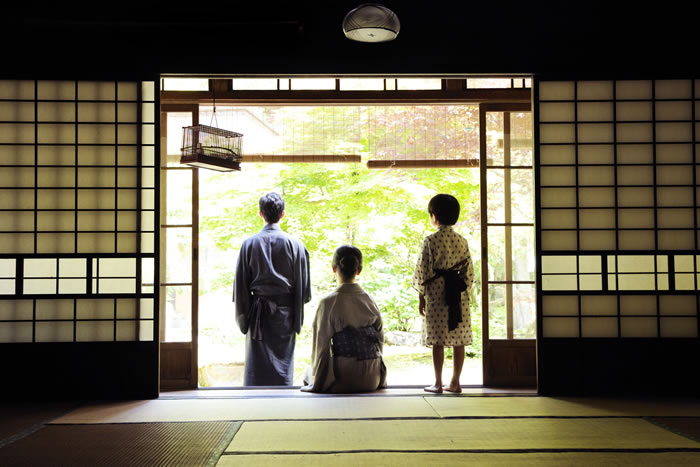
4/8/15 I watched Hirokazu Koreeda's Like Father, Like Son.  Much feels overly familiar and in not the best of ways but to that Koreeda imparts his playfulness, warmth and what I think is a humanistic outlook and feeling even if it is a humanism that is perhaps too simple at times. 

4/15/15 I watched Alain Giraudie's Stranger by the Lake.  An example of what I would call "pure cinema" - zero music, almost no close ups, long takes, wide shots, fluid edits and camera movements.  The ending again proves that the French might understand the power of the final five minutes better than anyone.  And the way Giraudie uses sound further supports France's claim to that title as well.

9/28/15 I watched Yann Gonzalez's Les Rencontres d'apres minuit.  Something darker and more irritated seems to be present in French cinema right now.  Between this film, the Giraudie above and the Kechiche from the same year, it seems clear that there is an interest in pushing the audience and their comfort level around sex in a very focused manner.  This film feels like a mash up of Fassbinder, Lynch and porno cinema.  Though I found it far less impressive than the two other works, I admire its confidence in charting a pretty fresh and unique world and staying within it for the duration of its run time.  

11/8/15 I watched Jonathan Glazer's Under the Skin.  I will give Glazer uncompromising and sustained but this cinema of extreme, red-lined at icy, is cold to the point of closing me off from it.  

1/4/16 I watched Marina Zenovich's Richard Pryor: Omit the Logic.  Some new information for me on Pryor but overall a bit of a formally uninspired work.  

6/4/16 I watched Richard Linklater's Before Midnight.  I have never been a huge fan of Linklater's Before films nor really of Linklater's work in general.  But this time I was impressed by his formal rigor, the emotionality of the performances and Linklater's ability to tread on Rossellini's turf without seeming painfully out of place.  

7/23/16 I watched Jeremy Saulnier's Blue Ruin.  Hints at Shotgun Stories and suggests that Saulnier might be one of our cinema's great new genre moodmakers.  What impresses most is how much Saulnier accomplishes visually, rather than through verbal exposition, and his command of atmosphere and tone are unusually strong.

3/10/17 I watched Douglas Tirola's Hey Bartender.  A nice fairly harmless look at the revival of the craft cocktail movement.  

4/7/17 I watched Shane Meadows' The Stone Roses: Made of Stone.  Gave me a greater glimpse into the group and the status they once had and the influence they still exert.  

1/20/20 I watched Shane Carruth's Upstream Color.  Not my thing at all.  It was like some endless drone of style that I could never connect to in any way.  

12/16/21 I watched Hong Sang-soo's Our Sunhi.  Hong captures what were the wandering twenties for many of us.  The ending is clever, catching us a bit by surprise but emotionally it does not feel as rewarding or as full as some of his other work.  

9/18/22 I watch Fred Schepisi's Words and Pictures.  A bit of a strange character study that has some great reflections on the power of words and visual art.  

9/25/22 I watched Steven Knight's Locke.  Knight wrote Eastern Promises and Dirty Pretty Things, both of which I like quite a bit.  This time he writes and directs and takes a huge gamble by focusing the entire movie on Tom Hardy in his car driving.  Hardy's talent as an actor, particularly his voice and gestures, keep our attention and enable a film that could easily feel thin in its theatricality, to take on additional dimensions for the viewing experience.   

1/17/24 I watched David Simon and Eric Overmyer's Treme.  So different from The Wire.  Yet for the bar it sets and the quality it maintains for four seasons, episode to episode, even moment to moment, it is every bit as great.  

It is Wiseman's thoroughness applied to the city of New Orleans in the wake of Katrina.  What is most remarkable is that Simon spends almost no time grappling with characters trying to determine if they should stay, why and if they should rebuild their city after one of the worst natural disasters in US History.  Because, and probably because it's accurate, most of the people in New Orleans spent very little time with that question.  

Simon's focus instead is to make the outsider understand.  Here is why this place is important.  Here is why it is special.  And here is why its people cared and care so much about their home.          

Thursday, May 9, 2013

Favorite (four), part nineteen


Just like my other eighteen posts in this series, I want to take a second to single out the highlights of my recent film viewing.  Most of the films I have been glad to finally see, but only very few have stayed with me. This series is my filter for those (and hopefully one or two will be good to someone else, too).


Jerry Schatzberg's Scarecrow
Zsigmond gives it great space and brings a real strength to much of the framing.  Its assets - its looseness, authenticity, and the freewheeling nature Schatzberg is able to capture quite often - leave its engine running a little cold at times.  But there's a Pialat depth and a heaviness of feeling that more than make for any lack of narrative drive.  When people start talking about the great character studies the American cinema produced in the seventies, I would comfortably and certainly throw this one into the mix. 

Alexander Mackendrick's The Man in the White Suit
A great little film I never knew much about.  Alec Guinness is wonderful as the vulnerable scientist.  And Mackendrick keeps things suspenseful, fun, and heartfelt.  One of those films that will be great fun to watch for years to come.  

Frank Borzage's The Mortal Storm
Sure it may be an extremely well-made film that makes you think more than it makes you feel.  But it is also frightening and communicates the horrors of fascism as well as anything I have ever seen.  Borzage's film seems like it might have been one of the main things Tarantino saw as he put Inglourious Basterds together.  Featuring some terrific set pieces (like IB), Borzage builds suspense by working through the characters rather than through music or any other cinematic manipulation.  Borzage who was known for his melodrama impresses here with an extraordinary sense of restraint.

Kathryn Bigelow's Zero Dark Thirty
I was quite impressed by the filmmaking which I found incredibly complex yet elegant and modern.  Bigelow maintains some increasingly rare sensibilities - a noticeable respect for framing, film as negative, and camera movement more as dance than prizefight.  I feel it only falters from greatness in its final act, becoming questionably plausible on certain major plot points and pretty lazy with certain emotional ambitions.  And although I am in the minority, I like Chastain's look but continue to question the depth of her abilities. 


Sunday, January 6, 2013

My Top 10 (or so) Films for 2012

I watched fewer films this year than I have in a really long time.  Other life took the lead.  And I have always watched more older stuff, wanting to fill in the gaps, but this year I saw almost no new releases.

I still though had a few moments of incredibly satisfying discovery and wanted to share.  It's my hope that a few of these will be good to you, too.


Raoul Walsh's The Man I Love (1947)


An extremely interesting noir, with a backbone that's as dark as can be even if devoid of any on-screen shootings, murders, or remotely graphic violence.  The mood is foggy, and Walsh's great tool here is restraint.   You feel the atmosphere building, at any moment ready to fall apart. The people are trapped, the outlook somber, and the effect all the more effective with no real catharsis ever offered.


Samuel Fuller's Park Row (1952)

 
A wound up, wonderful example of the physical cinema we've come to expect from Fuller.  It's abundantly clear this is a personal project for Sam.  He uses his camera like a weapon, thrusting it through spaces and spewing bile on all who stand in his way.


Manoel de Oliveira's The Strange Case of Angelica (2010)


My first experience with a de Oliveira film so I can't frame it alongside the rest of his work.  But what I can say is I found it masterful - one of these late films by a great filmmaker that is deceptively simple (think Gertrud) where the formal simplicity belies a specificity and depth that are the true signs of greatness.  Most shocking to me was the vitality of the editing, always cutting away seconds earlier than expected, to produce a level of restraint so vital to the heavyweight feeling the film ends up producing.  I could go on and on about the brilliance of metaphor here, de Oliveira's wonderful visual tics, and a cinema that is as mannered as Hartley's but as weighty as Dreyer's, but I'll wait to elaborate on those things until I have the pleasure of seeing a few more from this great Portuguese filmmaker.


Martin Scorsese's No Direction Home (2005)


This should go down as one of the greatest of all Scorsese films and the single best doc on Dylan (Pennebaker, sorry).  It's moving, incredibly cinematic, and captures the great one at his absolute, creative peak.


Andre de Toth's Day of the Outlaw (1959)


Raw, dark, and artful - there's something absolutely uncompromising about De Toth's work here.  The tone almost makes you think you're watching a horror film, but the pacing and cinematography feel straight out of an European art film.  One of the most unique westerns I have ever seen and simply a key work of any genre.


Michael Curtiz's The Breaking Point (1950)


So many things at once - a family melodrama, an action-adventure flick, a noir of reckless abandon, and a great film.  Curtiz shoots it with such a wonderful sense of invention, every shot a little off and angular, immediately creating an atmosphere of complete unpredictability.  With a third act that can be felt strongly in Taxi Driver and so many cylinders firing, it's a complete mystery to me why this one doesn't come up more during discussions of the great noirs.


Michael Powell's The Edge of the World (1937)


Perhaps the greatest of all films are those haunted by either life or death.  In this case, there's a cloud hovering over every moment suggesting the latter and a vitality in every frame leaning more towards the former.  Either way, this earthy, hefty film is among my favorite of Powell's work.


Tim Irwin's We Jam Econo - The Story of the Minutemen (2005)


Great doc in just how intimate and close it puts you to the band. About as satisfying a portrait of a group as I have seen on film - between the long, un-cut performance footage to the fly-on-the-wall hang-outs with the band.


Howard Hawks' The Crowd Roars (1932)


An early Hawks film I have been wanting to see for the longest time, I was finally able to catch up with it on TCM.  Already in 1932, Hawks proves himself adept at filming action, and there is a scene or two I would rank with the very greatest ever filmed by Hawks. The long sequence that begins with Cagney arriving at Indianapolis and ends with him at the diner illustrates the unique greatness Hawks possessed as storyteller. With just simple, direct, and fluid brush strokes, Hawks arrives at truth.  Profound, very human, and with all that is immaterial left behind.


King Vidor's Stella Dallas (1937)


I'll admit I'm a sucker for these types of weepies, and it doesn't hurt that Vidor was a real master.  Here he impresses by being so unafraid and uninhibited as he lingers in some VERY dark, uncomfortable places (like that hyper-disturbing scene at the soda shop).  Melodrama like we really don't see anymore and one of the better of its kind.

Saturday, December 29, 2012

spinning, currently

been catching up on a bunch of older music of late.  here's a snapshot of my last few hauls:

the b-52s - s/t
the blue nile - hats
the slits - cut
patti smith - horses
public image ltd. - public image
the jam - all mod cons
david bowie - low
iggy pop - the idiot
roxy music - s/t
the pretenders - s/t
mark hollis - s/t
the kinks - face to face
suicide - s/t
the who - sell out
the jam - sound affects
john lennon/plastic ono band
lou reed - transformer
richard hell and the voidoids - blank generation
mc5 - kick out the jams
velvet underground & nico
talking heads - fear of music
the go-betweens - 16 lovers lane
t. rex - electric warrior


Thursday, December 20, 2012

Favorite (four), part eighteen


Just like my other seventeen posts in this series, I want to take a second to single out the highlights of my recent film viewing.  Most I have been glad to finally see, but only very few have stayed with me. This series is my filter for those (and hopefully one or two will be good to someone else, too).


Michael Curtiz's The Breaking Point
So many things at once - a family melodrama, an action-adventure flick, a noir of reckless abandon, and a great film.  Curtiz shoots it with such a wonderful sense of invention, every shot, a little off and angular, immediately creating an atmosphere of complete unpredictability.  A third act that can be felt strongly in Taxi Driver and just a complete mystery to me as to why this film doesn't come up more during discussions of the great noirs.

Asif Kapadia's Senna
The footage makes this one pretty extraordinary at times, and it's the way that Kapadia choreographs the races that really shows his talents as an entertainer but also as a storyteller that knows how to trim the fat. By the end, there are moments I wish the filmmakers had chosen not to telegraph, but all in all, a very enjoyable doc about a subject matter of which I knew little to nothing.  

Michael Powell's The Edge of the World
Perhaps the greatest of all films are those haunted by either life or death.  In this case, there's a cloud hovering over every moment that suggests the latter but a vitality in every frame that leans more towards the former.  Either way, this earthy, hefty work is among Powell's very best.

Tim Irwin's We Jam Econo - The Story of the Minutemen
Great doc in just how intimate and up close it puts you with the band. About as satisfying a portrait of a group as any I have ever seen on film - between the long, un-cut performance footage to the informal dialogue with the band.


Tabu (Miguel Gomes)

10/19/12 I watched Ice-T's Something from Nothing: The Art of Rap.  There are some good interviews in there - Q-Tip, Chuck D, Eminem, Doug E Fresh, Dr. Dre, among others.  But a bit repetitive and far less than what it could be on this tremendous subject.  

12/1/12 I watched Leos Carax's Holy Motors.  As it began, I thought, "Wow Carax has just made the next Mulholland Dr, combining his unique sensibility into something that throws down the gauntlet for all auteurs moving forward."  As it wore on though I began feeling yet again that Carax was letting his desire to provoke outweigh his rare and gargantuan talents for unlocking cinema's capabilities for beatuy and lyricism.  Provided a good amount to think about but very few, if any answers.  And left me thinking, rather than moved, which in Carax's case, just leaves me feeling sad more than anything. 

1/13/13 I watched Kathryn Bigelow's Zero Dark Thirty.  I was quite impressed by the filmmaking which I found incredibly complex yet elegant and modern while maintaining a noticeable respect for framing, film as negative, and camera movement more as dance than prizefight.  I feel it only falters from greatness in its final act, becoming questionably plausible on certain major plot points and cheap with certain emotional ambitions.  I like Chastain's look but continue to doubt the depth of her abilities. 

2/2/13 I watched David O Russell's Silver Linings Playbook.  I am in the minority clearly on this one, but I felt more bullied and forced into feeling than anything.  I didn't care for its look, I really had issue with its editing, I liked Cooper more than I expected and Lawrence less.  A style that felt heavy, not fresh, and overall quite underwhelming for me.  
3/1/13 I watched Ben Affleck's Argo.  An amazing story is at the source of Affleck's third feature.  It is lazy and cheap at times, some of the final pat moments.  But Affleck's ability to keep the procedural wound tight and the clock ticking earn points in my book.  Desplat's score is of little interest and Prieto's camerawork services but certainly does not emote with any noteworthy impressiveness.  A film that is entertaining, even visceral at times, but lacking of much artistry and depth. 

5/20/13 I watched Malik Bendjelloul's Searching for Sugar Man.  An incredible story is at the heart of the doc, and at times, it almost seems so incredulous I was waiting for the movie's great rabbit to come out.  Rodriguez's outlook on his life is probably the most affecting ingredient of all.  I just wish the filmmakers spent more time talking to other American musicians and delving into the mystery of how someone this talented got completely lost and buried in the shuffle.  
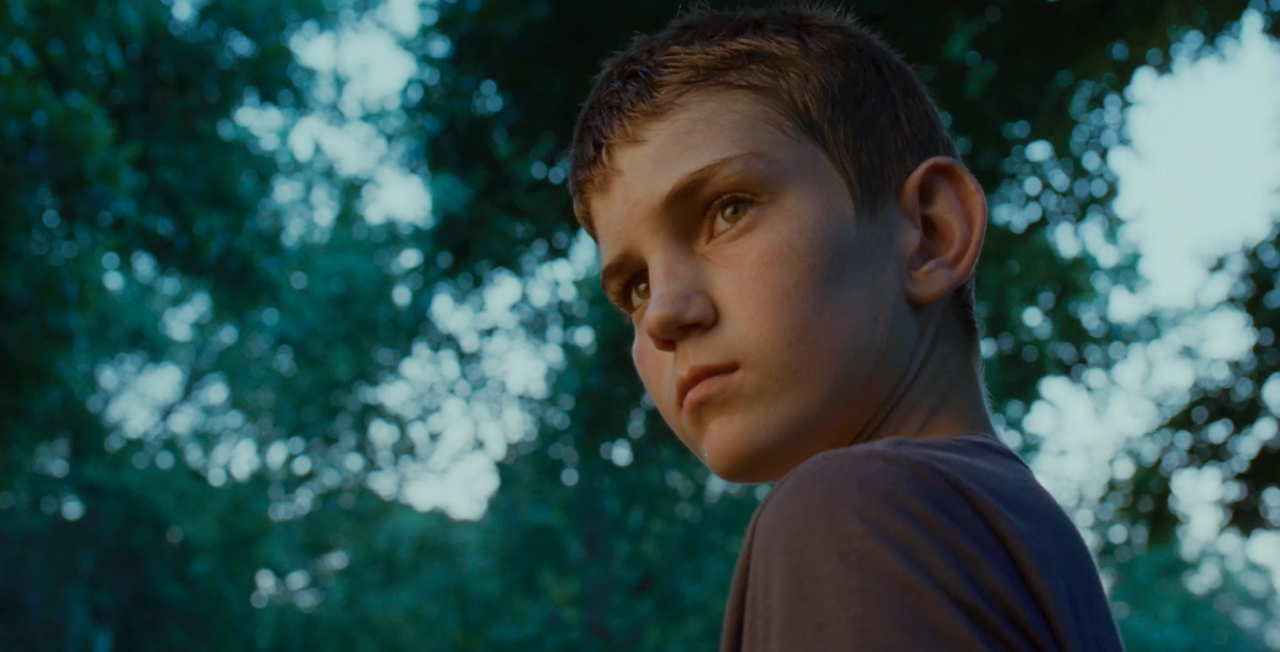
5/23/13 I watched Jeff Nichols' Mud.  I have seen all three of Nichols' features to date and would have to qualify Mud as the most ambitious yet the least accomplished.  Great directing is like great cooking.  You choose an unusual suite of ingredients and combine them in an original, harmonious way.  With Mud, Nichols unleashes the cupboard, arriving at something slightly more commercial (it seems more Hollywood complex) but sacrificing the overall effect of some of the sub-threads and, more important, the lasting power of the main story, Ellis' coming of age.  The brothers who come to kill Mud lack any interest or dimension, and I have to wonder if there was someone better, someone with more depth and more warmth, to take on McConaughey's role (maybe Eric Bana).  I will be interested to continue following Nichols' path although I worry he will get gobbled up like his buddy Gordon Green and become just another pretty generic arm of the system. 

5/26/13 I watched Terrence Malick's To the Wonder.  I went as a huge fan of Malick's previous outing The Tree of Life only to find this one disappointing.  Relying on many of the same elements - classical music, suburban setting, impressionistic editing, and roving camerawork - Malick falters here with the lack of any kind of emotional center.  Casting Affleck, one of the least expressive actors when he is allowed to be - I felt like a hamster going around and around on a wheel.  Malick offers nothing transcendent that I could locate and emotional inertia that ends up as more frustration than enlightenment. 

1/3/14 I watched Brian De Palma's Passion.  It is a continuation of the director's pet themes of doppelgangers, betrayals, and a vision of the American dream doomed for failure.  I questioned De Palma's lead casting but everything else is premium De Palma.  His cinema continues down its very singular path, and his formal approach remains as identifiable as any filmmaker ever to take on the medium. 

6/25/15 I watched Ice-T and Andy Baybutt's Something from Nothing: The Art of Rap.  I saw it three years ago but did not even really remember.  A few shining moments but otherwise a little underwhelming. 

7/22/15 I watched Abbas Kiarostami's Like Someone in Love.  What Kiarostami is hoping to convey I cannot say for sure.  But as a long time fan of his work I took it in as a very personal statement. Here Kiarostami, one of the cinema's warmest practitioners, the lovely wise soul of Iranian cinema is working in the middle of the Japanese metropolis.  Far removed are we (and he) from the wide open expanses of his classic earlier work and we can only guess how fearful he is of our world and what it seems to be quickly becoming.  Through the Olive Trees this is not.  Kiarostami has entered a far darker phase and in the process might be one of the few still holding up a mirror and trying to find a way to be hopeful.       

7/29/15 I watched Hong Sang-soo's In Another Country.  I used to think of Hong as a Korean Rohmer and there are strong similarities - a penchant for naturalism, conversation as the main action and activity, and a recurring interest in the potential disruption of relationships due to the arrival of a third person.  But Hong also goes for real whimsy and seems lighter than Rohmer.  In fact the more I think about it he seems like this odd blend of Rohmer and Rivette, structurally adventourous but grounded primarily in reality.  And I have long had a thing for Huppert.  Hong uses her well, brings out her appeal, and ends up delivering one of his smoothest, most likable films yet.   

9/26/15 I watched Noah Baumbach's Frances Ha.  It's pretty gratingly quirky.  Though Baumbach might want to make a modern day Nouvelle Vague entry, his cinema lacks the formal inventiveness of the Cahiers crew and some of the key tenets of their work, a respect for beauty above all.  

11/28/15 I watched Sam Mendes' Skyfall.  It is interesting to see a Bond film get the Mendes/Deakins treatment.  It looks great as one would expect from the great cinematographer and it is all smartly packaged in typical Mendes fashion.  Although a bit too derivative of Hopkins and his turn as Lector, Mendes delivers nice, nostalgic touches such as the unveiling of the Aston-Martin and the Skyfall mansion for the 50th anniversary of Bond.

5/7/16 I watched Jay Bulger's Beware of Mr. Baker.  Baker was an interesting figure and Bulger's doc gives his story stylish flair but I was never terribly involved or affected.  Baker just seemed like another very talented artist that was negligent of himself and of his life.  

10/22/16 I watched Francis Ford Coppola's Twixt.  Coppola's visual abilities impress and he is certainly unafraid to do something personal at risk of losing the audience.  I found it a bit too obtuse but was glad to see the great director continuing to push himself within the medium.

11/20/16 I watched Harmony Korine's Spring Breakers.  As a critique of middle class young America, I guess this can be viewed as important, powerful stuff - the contradiction between what we think our youth is doing versus what might actually be happening.  But Korine is such a provocateur that after a while seems his methods undermine some or most of his desired effect.  You can only eat so much cayenne before the tongue gets numb.  

11/26/16 I watched Miguel Gomes' Tabu.  Clearly I am late to the party but there seems to be something special right now happening in Portuguese cinema.  I already recently got on the bandwagon for Manoel de Oliveira and now I am starting to see what this Gomes guy is all about.  If Tabu is any indication, he might be one of the most gifted and bold filmmakers at work right now in the world.  Visually it is absolutely rapturous cinema, using modern black-and-white like the killer poetic weapon it can be when in the right hands (think Wenders' work with Muller or Dead Man, again Muller).  And Gomes' style, in addition to his visual approach, is as free-wheeling and exciting as Godard can be in his most effective moments.  Gomes jumps all around chronologically, mixes silent cinema with voiceover and uses music and nature as well as the great Swiss one.  I can't wait to see more of Gomes' work.  He's exactly the type of filmmaker, in its current isolationist cinema culture, Americans are losing out on by not having more readily available.   

5/22/17 I watched Judd Apatow's This Is 40.  There are a couple of funny scenes but overall suffers from a bit of stylistic laziness and an overabundance of yuppiness.  

9/3/18 I watched Manfred Kirchheimer's Tall: The American Skyscraper and Louis Sullivan.  An interesting, although a bit pedantic, doc on the history of the skyscraper.  

9/8/19 I watched Amy Seimetz's Sun Don't Shine.  For the most part I am a fan of critic Richard Brody's taste and try to seek out when possible the work that he champions.  I was not with him on this one though.  It made me feel yet again that if the Nouvelle Vague is the cinema of remembrance, most mumblecore films are a cinema of forgetting.  

5/5/22 I watched Jacob Rosenberg's Waiting for Lightning.  Decently interesting doc about skateboarder Danny Way who I previously knew nothing about.

6/7/22 I watched Sarah Polley's Stories We Tell.  In the way she straddles the line between fact and fiction, Polley's "documentary" reminds me of Scosese's Rolling Thunder Revue.  Polley should be commended for the film's originality, its bold approach to piecing together the past and the sheer result of the recreated footage her team put together.  It should serve as a lesson to all documentaries and the abundance of tawdry recreated footage used to fill in their story gaps.  

10/25/22 I watched Dan Sallitt's The Unspeakable Act.  I have been following Sallitt's blog for probably more than ten years now and have long been a fan of his taste and the extent of the movies he's seen.  But this is the first time I have actually watched something he made.  The movie at the end is dedicated to Rohmer.  I was impressed that Sallitt was willing, like the French filmmaker, to shy away from a film score and stick with ambient only sound.  It is a strong choice and one that immediately limits a film with the type of audience it will be able to find.  It is the right choice here and Sallitt deserves to be acknowledged for his audacity with regards to this.  He is also quite brave in his choice of subject matter and simply the way he chooses to shoot certain scenes.  Most notable to me is the long take of Jackie losing her virginity.  I know that Sallitt has great reverence for Rohmer and even Pialat but ultimately I found that his film did not rise to a transcendent place at the end like the former or have the emotional weight of the latter.        

2/13/23 I watched Drew DeNicola and Olivia Mori's Big Star: Nothing Can Hurt Me.  A film for anyone like me with a cursory knowledge of Big Star and the cult that has grown around the 70s Memphis band.  The interviews shine light on the short, influential career of the band and moments like Stipe singing Kangaroo make you want to immediately go out and listen to all their work.  

Saturday, December 15, 2012

Favorite (four), part seventeen


Just like my other sixteen posts in this series, I want to take a second to single out the highlights of my recent film viewing.  Most I have been glad to finally see, but only very few have stayed with me. This series is my filter for those (and hopefully one or two will be good to someone else, too).


Martin Scorsese's My Voyage to Italy
An incredibly thorough look at Neorealism and the Italian cinema that has so profoundly influenced Scorsese.  Special focus goes to Rossellini, but De Sica, Visconti, Fellini, and Antonioni also receive insightful commentary.  A great introduction to anyone just beginning to look into this, one of cinema's greatest moments.

Raoul Walsh's The Man I Love
An extremely interesting noir, with a backbone that's as dark as can be, yet devoid of any on-screen shootings, murders, or highly realized violence.  The mood is foggy, and Walsh's great tool here is restraint. You feel the atmosphere building and at any moment ready to fall apart. People are trapped, the outlook somber, and the effect all the more effective as no real catharsis is ever offered.

Samuel Fuller's Park Row
A wound up, wonderful example of the physical cinema we've come to associate with Fuller.  It's clear this is a personal project for Sam as he uses his camera like a weapon thrusting it through spaces and spewing bile on all who stand in his way.  One of the truly great Fuller films.  

Tony Silver's Style Wars
If you grew up with hip-hop like I did, this is one of the great documents of the era.  I first stumbled upon it while reading an interview with Michael Rapaport around the release of his Tribe Called Quest doc.  It's a remarkably intimate look at the scene that would, just a year later, receive narrative treatment in the form of Beat Street and Breakin'. Special mention to the lost gem unspooling over the end credits, Rammellzee and K-Rob's Beat Bop.


Friday, April 6, 2012

Favorite (four), part sixteen

Just like my other fifteen posts in this series, I want to take a second to single out the highlights of my recent film viewing.  Most I have been glad to finally see, but only very few have stayed with me. This series is my filter for those (and hopefully one or two will be good to someone else, too).


Manoel de Oliveira's The Strange Case of Angelica
My first experience with a de Oliveira film so I can't frame it alongside the rest of his work.  But what I can say is that I found it masterful - one of these late films by a great filmmaker that is deceptively simple (think Gertrud) where the formal simplicity belies a specificity and depth that are the true signs of greatness.  Most shocking to me was the vitality of the editing, always cutting away seconds earlier than expected, to produce a level of restraint so vital to the heavyweight feeling the film ends up producing for the viewer.  I could go on and on about the brilliance of metaphor here, de Oliveira's wonderful visual tics, and a cinema that is as mannered as Hartley's but as weighty as Dreyer's, but I'll wait to elaborate on those things until I have the pleasure of seeing a few more from this great Portuguese filmmaker.


Martin Scorsese's No Direction Home
This should go down as one of the greatest of all Scorsese films and the single best doc on Dylan.  It's moving, incredibly cinematic, and really captures the great one at his absolute, creative peak.  


Fred Niblo's The Mysterious Lady
I can keep it simple here.  Garbo is sexy personified in this very inventive and entertaining early work.  Want to understand the mystique around Garbo - this is a great place to start.


Andre de Toth's Day of the Outlaw
Raw, dark, and artful, there's something absolutely uncompromising about De Toth's work here.  The tone almost makes you think you're watching a horror film, but the pacing and cinematography feel straight out of a European art film.  One of the most unique westerns I have ever seen and simply a key work of any genre.


Sunday, January 1, 2012

My Top 10 (or so) Films for 2011

I spent the last year watching some older stuff, filling in a few gaps, and catching up on films I had always wanted to see.  Here's what I came up with -- my list, the several hands full that reminded me of why I continue chasing cinema past:


Michelangelo Antonioni's The Passenger (1975)


Antonioni's incredible talents are all over -- his meticulous framing, his daring yet languid camerawork, and his feel for spaces that the medium somehow forgot to cover.  Slow and cerebral like all his work, The Passenger separates itself from the rest of A's films with its summer exteriors and rustic locations.  It's simply one of the cinema's truly great road movies.

Robert Altman's Thieves Like Us (1974)


The most sexually-charged of the Altman pics I've seen, and certainly one of the most interesting.  Feels like a pet project, extremely unconventional stylistically just like McCabe.  And strange as it may seem on paper, a precursor to Michael Mann's free-form stylings on Collateral, Miami Vice, and Public Enemies.  


Corneliu Porumboiu's Police, Adjective (2009)


The new Romanian cinema has gotten much acclaim of late, and after seeing 4 Months... and this film it's easy to see why.  What's so striking is its fresh naturalism, running in such a different direction from cinema's other reigning naturalist champ, the Dardenne brothers. Unlike the handheld close-ups populating the work of the Belgian brothers, Porumbiou keeps the camera fixed and in wide frames.  He also favors long takes in a way that we rarely, if ever, see in the work of the Dardennes.  Other than the final ten minutes, I'd have no hesitation declaring it one of the greatest of recent films, and a full-blown masterpiece.   


Jacques Tourneur's Canyon Passage (1946)


First, I have to thank the great Peter Lenihan for placing this gem on my radar.  What a western it is.  It has the psychological complexity of the Anthony Mann westerns, and already in 1946 feels like it's ripping the genre apart.  But it's not cold and clinical like the Mann films. Tourneur's camera's always moving, and there's a tremendous vitality in every single shot.  Brings to mind another Tourneur favorite of mine, Stars in My Crown.  And makes yet another strong argument for Tourneur's place in the highest of all pantheons.  


Sam Peckinpah's Pat Garrett and Billy the Kid (1973)


A loose, mournful western from one of the late masters.  Peckinpah meanders, ponders loyalty and lost ideals, and delivers what might be the most personal of all his works.  The loss of a lifestyle, the onset of civilization, and a western about not fitting in, that doesn't really fit into anything that's come before or since. 


Terrence Malick's The Tree of Life (2011)


Malick is looking at different ways for cinema to work.  And although his connection to nature may not jump off the screen like it did in The Thin Red Line, his incredibly specific memories of childhood allow him to wash connections over us.  He does it in very short brush strokes, and as he swims through his own fleeting images, we see so much of ourselves. His work with the children is simply extraordinary.  And I think his style really gains with many of the jump cuts remaining in the tool box this time. Full of narrative courage and exploration (the first time the animated sequences break the narrative it seems as though a whole new prototype for story is being offered), and a work of tremendous ambition.  I think there are flaws.  Sometimes his elliptical wanderings go too far and end up feeling more elusive than illuminating.  And after seeing the film twice, I'm still not convinced he wouldn't have benefitted from a stronger actress than Chastain.  But it's a dense film, inviting discussion and multiple visits.  


Hirokazu Koreeda's Still Walking (2008)


The third of the director's films I've seen, and he continues to rank among my favorite of all the contemporary Asian filmmakers. Koreeda's undeniably a humanist, and as his with other two films, there are moments that carry a tremendous amount of power.  Not perfect, I particularly found a little fault with the saccharine nature of some of the score.  But all in all a memorable effort from one of the few directors still carrying Ozu's torch.  

Werner Herzog's Fitzcarraldo (1982)


Part of that unique genre, the "extreme film", along with works such as Apocalypse Now and Sorcerer.  These films all show filmmakers willing to travel to dangerous lengths to paint unprecedented canvases and test their own abilities as storytellers and dream purveyors. Herzog's film might feel slightly disjointed at times.  But the scope at which he is working and the heart that drives both him and Fitzcarraldo allow the film to rise memorably above any shortcomings.  A classic of the genre, and probably about as personal as Herzog's work can ever be.  


Wim Wenders' Tokyo-Ga (1985)


An exploration that almost feels like a Godard or Marker essay.  An unorthodox, somewhat meandering doc that seems essential viewing for any fan of Ozu's work.  Wenders mourns cinema's loss of one of its most special practitioners using Ozu's favorite city, Tokyo, to look at how the world has changed since his passing.  Wenders also memorably spends time with some of Ozu's closest collaborators.  


Charles Ferguson's Inside Job (2010)

A powerful and utterly disturbing portrait of the events that led to 2008's global recession.  Ferguson explains some of the chief causes in a very lucid manner and presents a very passionate attack on America's financial services industry.  Whether or not you agree with all that he has to say, this is a must-see, if for nothing else, the opportunity to get a further look at many of the chief players.  


Roberto Rossellini's The Rise of Louis XIV (1966)


The first of Rossellini's historical dramas that I've seen, and admittedly it takes awhile to get used to his later style.  But it snakes its way around, accumulating historical import, and by the end, finds its emotional highpoint.  Another transcendent and powerful work by one of cinema's most unusual and rigorous stylists.   


Maurice Pialat's La Gueule Ouverte (1974)


Pialat only made ten features, and this is the eighth that I've seen.  It's the one time he collaborated with the masterful cameraman, Nestor Almendros, and the partnership lends immeasurable poetry and lyricism to Pialat's heavy, uncompromising cinema.  I think it's my favorite Pialat, and with its final shot one of the great closing shots in all of cinema, a nice way to end 2011.