Showing posts with label Maurice Pialat. Show all posts

Saturday, November 26, 2011

Favorite (four), part fifteen

Just like in my other fourteen posts thus far in this series, I want to take a second to single out the highlights of my recent film viewing.  Most have been first-time viewings, and most I have been glad to finally see. But only very few have stayed with me.  This series is my filter for those (and hopefully one or two will be good to someone else, too).


Maurice Pialat's La gueule ouverte
Who is Maurice Pialat and what makes him special as a filmmaker? Some have called him the French Cassavetes.  But I think that tag is a bit misleading.  Pialat, like Bresson, was a painter first before trying his hand at film, and his work is much more visually striking than that of Cassavetes.  Where their paths converge is in their raw approach, lack of music, and predilection for loose, extremely natural performances. Pialat only made ten features in his career, and this is the eighth that I have seen.  It's the one time he collaborated with the masterful cameraman, Nestor Almendros, and the partnership lends poetry and lyricism to Pialat's heavy, uncompromising cinema.  I think this is one of (if not) the strongest film(s) of Pialat that I have seen.  And I hardly ever throw the word out there, but I think it's a masterpiece.

Yasujiro Ozu's Early Summer
Ozu mixes up the approach a little, adding more music than usual and quite a number of incredibly expressive tracking shots.  The cumulative effect though is about the same as I have to come expect with Ozu's cinema - piercing and majestic as anything the cinema has ever produced.  Feeling rattled or a bit adrift, I would think anyone coming in with the right amount of patience would leave Ozu's cinema (this work definitely included), reminded of the lyrical beauty of life.  Ozu has gotten short shrift when it comes to a reputation as something austere and wholly cerebral.  There's a nice playfulness at times with this one, as well as a real lively spirit.  


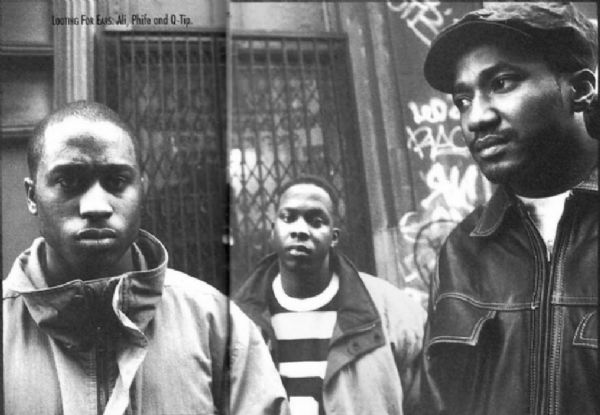
Michael Rapaport's Beats, Rhymes & Life: The Travels of A Tribe Called Quest
My four years of college could really be distilled down to two or three albums, one of which is Tribe's Midnight Marauders.  Rapaport does a great job of shedding some light on Tribe -- their creative process, inner friction, and tremendous importance within the history of hip-hop. Rapaport takes us through a wide range of emotions.  And even when the filmmaking might be a little generic, Tribe's music playing in the background reminds us of how many incredible and lasting tunes this wonderful group left to us.  A great trip back to the late eighties and early nineties, and arguably to the only great artistic movement I've lived through so far.  

Tsai Ming-liang's I Don't Want to Sleep Alone
Tsai's cinema is remarkably consistent from film to film, thematically, rhythmically, and formally.  No one does loneliness and modern alienation, post-Antonioni, as well as Tsai.  And there's a repressed sexuality about his work that's as strong in its charge as anything in Lynch, Cronenberg, or anyone else's work.

Monday, April 12, 2010

1991: My Own Private Idaho (Gus Van Sant)

1991: My Own Private Idaho (Gus Van Sant)
God I miss Heath Ledger, Brittany Murphy, Brad Renfro, and especially River Phoenix.  All young actors with an incredible amount of talent that the American cinema will never quite replace.  Phoenix had an elemental presence on screen.  He was wise, full of life, and had a weight of vulnerability about him that I hadn't seen since Clift or Dean. I always greatly enjoyed his work and never any more than in this early Van Sant film.  

I think I'm on the somewhat unpopular side when it comes to Van Sant. Although I greatly admire his later, more experimental work (Elephant, Gerry, etc), I definitely prefer some of his other films.  I guess I like it when he takes himself a little less seriously, like he does here.

Idaho is beautifully shot, a fun concoction of about every genre, and full of Van Sant's playful, stylistic flair.  It's breezy with a good deal of heart and still feels fresh, vital, and tonally quite unique.  Van Sant's versatility continues to fascinate, one of the most interesting directors out there who seems to be able to do most anything.  About as bold and liberated as they come, I look forward to seeing where he goes next.  

Other contenders for 1991: I still have some things to see from this year.  These include:  David Mamet's Homicide, Ken Loach's Riff Raff, David Cronenberg's Naked Lunch, Akira Kurosawa's Rhapsody in August, Jacques Rivette's La belle noiseuse, Hal Hartley's Theory of Achievement, Ambition, and Surviving Desire, Martin Scorsese's Cape Fear, Stanley Kwan's Actress, Arnaud Desplechin's La Vie Des Morts, Peter Greenaway's Prospero's Books, Bruce Beresford's Black Robe, Gary Trousdale and Kirk Wise's Beauty and the Beast, Cedric Kahn's Bar des rails, Philippe Garrel's J'entends plus la guitare, Martha Coolidge's Rambling Rose, and Jon Avnet's Fried Green Tomatoes.  At some point, I'll need to revisit Oliver Stone's JFK.  It's been too long since I've seen it to know where it'd place on this list.  But from this year, I really like The Coen Brothers' Barton Fink and Jonathan Demme's Silence of the Lambs.  I love Abbas Kiarostami's And Life Goes On.  And my closest runner-up is Maurice Pialat's Van Gogh.

1/10/11 I watched Richard Linklater's Slacker.  Original, courageous, and often formally fairly daring.  But it is "slack", and almost always resolutely un-cinematic.  Linklater has a way with casting and actors though, and given its context, it's quite the debut.  

1/30/11 I watched David Mamet's Homicide.  There are people who are serious fans of Mamet's oblique approach to language and filmmaking, but I can't say I'm really one of them.  Mantegna turns in a strong performance, but much of the rest of the cast feels a bit uninspired.

9/15/11 I watched Jacques Rivette's La belle noiseuse.  Heady and complex, Rivette's work continues to elude me a little.  There are many interesting ideas at work around the artist life, but Rivette's uncompromising and lengthy methods leave me a little lukewarm.  

10/25/18 I watched Frederick Wiseman's Aspen.  Another fascinating doc by Wiseman that is most remarkable in Wiseman's effort to capture as many sides as he possibly can of the affluent Colorado mountain community.

6/15/19 I watched Claire Denis' Keep It for Yourself.  It is a wonderful early work by Denis that shows off her incredible eye, ear, and like Jarmusch, incredible feel for the outsider.  It is essential Denis that deserves to be seen and talked about.  

4/2/20 I finally watched Stanley Kwan's Actress.  It is a film I have been wanting to see for more than twenty years.  Usually with that type of expectation comes disappointment but not this time.  Aside from being absolutely gorgeous - in its cinematography, set design and wardrobe - it is utterly unique as a biopic.  By consistently merging interviews with people that knew Ruan and actual foootage of her with fictional shots and scenes, Kwan is able to create a character we know in deeper and different ways than cinema has previously allowed.  A film that is a key precursor to In the Mood for Love and one that warmly invites us to dig deeper into China's cinema of the past.

6/29/20 I watched Julie Dash's Daughters of the Dust.  It is a deep and highly stylized meditation on race.  It is not always easy to follow but the depth of feeling is mostly affecting.
1/18/22 I watched Andre S Labarthe's The Scorsese Machine.  Nothing incredibly new or memorable here with the exception of when Scorsese is asked to explain what his seventies films were trying to accomplish with respect to cinema's past.  
5/20/22 I watched Arnaud Desplechin's La vie des morts.  It's a film I have been wanting to see for more than 25 years that did not disappoint when I finally was able to track it down.  Before even making his first feature, Desplechin demonstrates his very special ability working with an ensemble of some of France's greatest actors.  And already so much of Desplechin's style is there - the edginess of the editing, the natural and almost laconic warmth and intimacy of the moments and his comfort in depicting the youth, particularly many of the females of his generation.
7/16/22 I watched Christopher Munch's The Hours and Times.  Aside from a couple of moving scenes, when Lennon breaks out in dance for one, I never was that absorbed in the film or filmmaking.
1/14/24 I watched Agnes Varda's Jacquot de Nantes.  Extremely insightful for fans of Demy but you have to be very curious and okay with Varda's usual whimsy.

Wednesday, March 17, 2010

1968: L'enfance nue (Maurice Pialat)

1968: L'enfance nue (Maurice Pialat)
Maurice Pialat has never really caught on in this country.  Certain of his titles, and he didn't make that many films, remain without distribution in the States.  But according to French cinephiles I know, he is considered the most important French director to emerge post-Nouvelle Vague.  Along with Leos Carax, he's certainly been the most important to me.  


L'enfance nue, Pialat's debut feature, is one of his titles that's not terribly easy to find.  In fact, I've only seen it once and that was at the old Cinematheque, Palais de Chaillot (the namesake of my production company).  With Ken Loach's Kes, it's my favorite film about the vulnerabilities and dangers of childhood.  In typical Pialat fashion, this one's emotionally raw and unsentimental, formally natural and unobtrusive.


Pialat might be too tame formally for the general American public, or his lack of sentimentality might be the turn-off.  Whatever it is, in my book he remains one of the giants of the last fifty years.  An honest, deep, keen filmmaker, a certain Bressonian purity coupled with Nicholas Ray's emotionality.  I can only hope that Pialat will soon get his due stateside.  We've been deprived long enough of this truly great body of work.


Other contenders for 1968: A good number of titles I still need to see.  These include:  Nagisa Oshima's Death by Hanging, John Cassevetes' Faces, Alain Resnais' Je t'aime, je t'aime, Mel Brooks' The ProducersJean Eustache's La rosiere de pessac, Ingmar Bergman's Shame, Richard Lester's Petulia, Lindsay Anderson's If..., Tomas Gutierrez Alea's Memories of Underdevelopment, and Orson Welles' The Immortal Story.  Although I have no runners-up this year, I need to revisit Roman Polanski's Rosemary's Baby, Sergio Leone's Once Upon A Time in the West, George Romero's Night of the Living Dead, and Stanley Kubrick's 2001. It's been too long since I've seen any of them to know where they'd place on this list.  


5/8/11 I watched Mel Brooks' The Producers.  I loved Gene Wilder in this, and really liked a scene or two.  But otherwise, I didn't find it all that funny and just a little tiresome after awhile.  


5/9/11 I watched John Cassavetes' Faces.  A tough go, for sure.  But Cassavetes definitely is up to some interesting stuff in terms of framing and editing, and he pushes through some cinematic artifice that most people can never completely overcome.  


6/13/11 I watched Franco Zeffirelli's Romeo & Juliet.  Although the most famous romance ever, it didn't grab me like some other movie romances.  Zeffirelli actually proved most effective for me during a couple of the fight sequences.  His collaboration with the great Nino Rota is also memorable.  

9/7/14 I watched Orson Welles' The Immortal Story.  One of the few works by Welles I had never seen is yet another testament to the director's genius and brilliance.  The story is labyrinthine and deeply auto-biographical for anyone who wants to think about it in terms of Welles' one-off success with Kane.  It joins Renoir's Partie de campagne as one of the medium's all time great short efforts.  It is incredibly poignant and powerful in spite of the limited means it surely seems Welles had at his disposal.  

7/23/17 I watched Gordon Douglas' The Detective.  I had never heard of this film until recently when I saw it was programmed as part of a series at the Paris Cinematheque focused on 70s American cop movies.  Sinatra proves he was once again a double-threat as a singer and actor, very comfortable in front of the camera and believable in a number of roles.  Bisset was gorgeous, reminiscent of  Julie Christie during this period, but even sexier and with an even more dangerous sensuality.  And the film, though raw and uneven, goes deeper than most detective films and gives a real sense of the feelings and conflicted morality many people in the profession must face.  

8/4/17 I watched Don Siegel's Coogan's Bluff.  A tedious Right vs Left police film that never ever connected for me.

10/28/17 I watched Frederick Wiseman's High School.  What jumped out at me first was how consistent Wiseman remained from this film to At Berkeley.  The philosophy, the aesthetic, the sensibility all felt unusually similar to the filmmaker's approach forty years later.  Because of its length, this one was less immersive and affecting but great to see another work by the immense filmmaker.

10/12/19 I watched George Romero's Night of the Living Dead.  I can see its inventiveness and I can see its influence on the latest Jarmusch or Carpenter or Jordan Peele.  I just never fully got into it.  

5/11/24 I watched DA Pennebaker's Monterey Pop.  Great portrait of 1968 America and its music scene.  Particularly interesting to see Janis and Jimi and their huge talents at work.